Becoming the Pastor’s Wife, by Beth Allison Barr
'Remarkable and accessible' book examining the connection between the decline of female ordination (present in late Roman times and in the medieval period) and the development of the role of the pastor’s wife in evangelical churches
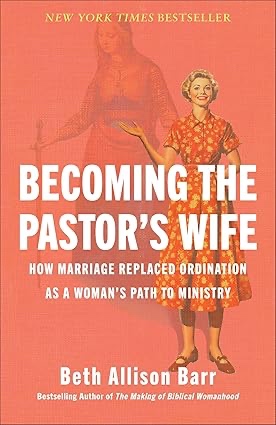 Becoming the Pastor’s Wife: How Marriage Replaced Ordination as a Woman's Path to Ministry
By Beth Allison Barr
Brazos Press
ISBN: 978-58743-589-8
Reviewed by Sue Clements Jewery
My first task in this review is, as a (retired) pastor’s wife myself, to make it clear that this is most definitely NOT a book about surviving as a person married to an ordained minister!
The book is a follow on from the author’s first book: The making of Biblical Womanhood: how the subjugation of women became Gospel truth, published in 2021, and a best seller.
Together, these two books provide the best evidence I have come across for the authenticity and validity of ordination for women. I was delighted to discover that the author was a speaker at last year’s Greenbelt festival, and I found her session moving, and invigorating.
Beth Allison Barr’s remarkable and accessible book combines erudite scholarship with her 20 years of personal experience, exposure and vulnerability as the wife of a Baptist minister. The author is the James Vardaman Endowed Professor of History at Baylor University in Texas and a specialist in mediaeval history.
The book, subtitled ‘How marriage replaced ordination as a woman’s path to ministry’, examines the connection between the decline of female ordination (present in late Roman times and in the medieval period) and the development of the role of the pastor’s wife (two for the price of one!) in evangelical churches, notably in the USA with the Southern Baptists. Barr demonstrates that the stereotype of the pastor’s wife within modern evangelicalism is supported neither by the Bible nor the historical record. Both, in the author’s opinion, have been misinterpreted and misquoted.
Extremely readable (I found it compelling), the book has nine chapters each of which is backed up by detailed reference notes to sources. Chapter titles are intriguing: eg ’When women were priests’ and ‘The not-so-hidden history of mediaeval women’s ordination’.
In addition, Barr and her two research associates examined 150 books written between 1923 and 2024 about pastors’ wives in their study. These are listed in the notes. (I looked in vain for the volume entitled Queen of the Manse given to me just after my husband’s ordination – hopefully that is now out of print!).
I highly recommend this book.
Sue Clements-Jewery is a retired sexual and relationship therapist, pastoral supervisor and trainer
01/05/2026