Lifelines, by Julian Hoffman
'Part autobiography, part ethnography, part poetic narrative is both a lament and a celebration of the natural world written in attentive, awakened language'
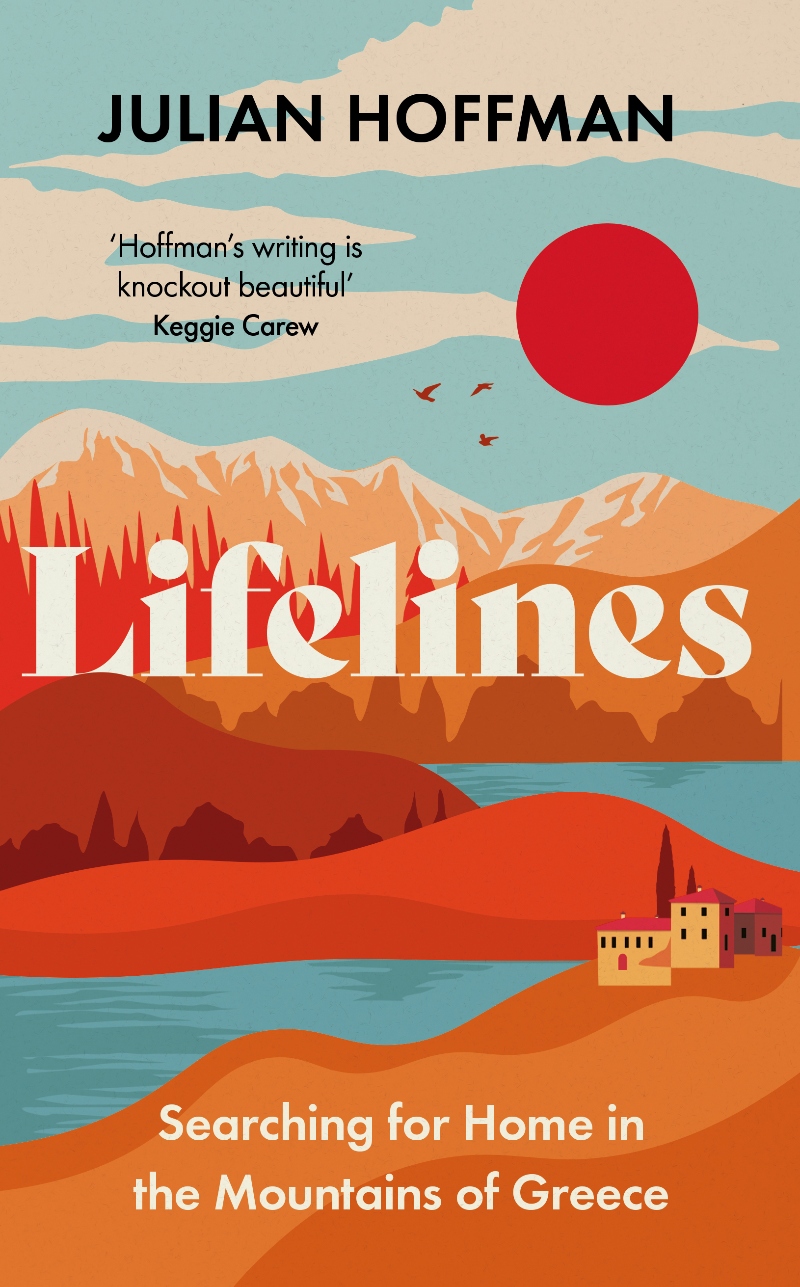 Lifelines - Searching for Home in the Mountains of Greece
By Julian Hoffman
Elliott & Thompson
ISBN: 978-1-78396-864-0
Reviewed by Shaun Lambert
Lifelines is the third book written by nature writer Julian Hoffman who has lived on the shores of Lake Prespa for the last 25 years, a lake bordered by three countries and a place where you can still encounter the wild.
This lyrical book is prefaced by two quotes. The first is:
Will there be a world
to lament?
Celebrate?
This book, which is part autobiography, part ethnography, part poetic narrative is both a lament and a celebration of the natural world written in attentive, awakened language. The author tracks not just the pelicans, otters, bears, wrens, wolves or kestrels that live on and around the lake, but also the wider patterns of climate catastrophes around the world.
The second quote says:
There is another world, but it is in this one.
Julian Hoffman writes about this other world within our world, the world of interbeing and interconnecting lifelines. A world that can be perceived when we pay attention, open our awareness, notice the small details of nature around us.
The reader is not only awakened through the evocative description of the geographical centre of the book, the Prespa Lakes in northern Greece, which are shared by Albania and North Macedonia. The author also consistently widens his field of awareness (and ours) to the larger story of sharing a world as human societies with the more than human world of pelicans, brown bears, and golden eagles as he takes us to Australia, India and Bali.
In the first section of the book, Grounding, the author charts the lifeline he and Julia (his wife) were offered by the local community of Agios Germanos, a village on the shores of Prespa. They were offered shelter so hospitable they are still there 25 years later.
What does the author mean by lifelines? It is not a narrow, technical definition for human beings, like a roadway, or powerline, it is the invisible lines that connect and give life to all living things in the other world that also lives in this world – the other world we don’t see because of our anthropocentrism. In the way an abandoned swallow’s nest can be a lifeline for 14 small wrens who know ahead of time a killing cold is coming, and they need to shelter together. In that small observed encounter is a parable for the whole world. Neither our lifelines nor our stories are our own.
The writing is as layered as the geography and history, as if the environment has permeated the poetics of the author. The crossroads that Prespa is mirrors the wider crossroads we are at with climate and biodiversity crises. Key words are shifting, shared, linked, indivisible, interwoven, inseparable.
With these wider issues there is no hysteria, hype or emotional manipulation. I feel as though I am being well informed, that I’m in the presence of someone after the truth. The information or knowledge offered could be that of an academic but written by someone who is fully present and makes this world within the world accessible to all of us. And yet I am deeply moved as by a piece of music with rich emotional tone. As a book it is a vessel, not just of memory, but of hope and inspiration.
The two or three pages that relate his encounter with a bear in the wild are as visceral and intense as any I’ve read. To adapt a phrase from the author, the book ‘brought home to me just how much more there is in here – within the world we’re held by.’ This includes the truth that we can still do something about the climate emergency and that is not wishful thinking.
As a book of inner vision able to see the invisible, it weaves ever increasing circles of perception in a world of ever decreasing circles of choice. As his wife Julia says, ‘belonging isn’t passive but active.’ One of my favourite lines is where the author writes, ‘all that was ever wild is still within us…’
All that was ever within me was stirred by this book and I intend to belong to this world from now on in an active, not a passive way.
The Revd Dr Shaun Lambert is a Baptist minister, author, psychotherapist and Honorary Mindfulness Chaplain at Scargill Movement, a Christian community and retreat centre. His most recent book is Mindful Formation - A Pathway to Spiritual Liberation
Baptist Times, 18/07/2025