Boys will be Boys and other Myths, by Will Moore
'Explores the toxic myths which frame how we read scripture: a promising start and conclusion, and offers much just criticism of many aspects of our culture, but I felt there were some problems with the author's approach'
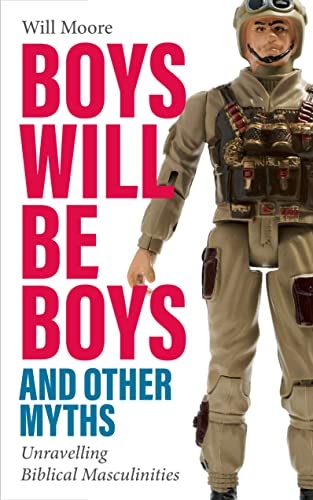 Boys will be Boys and other Myths - Unravelling Biblical Masculinities
By Will Moore
SCM
ISBN 978-0-334-06300-1
Reviewed by Pieter J. Lalleman
I am writing this review at the moment when the London Fire Brigade is criticised for discrimination against women and non-white people. The book under review could be a contribution to the hot debate of the 2020s, male chauvinism and gender issues, but it is unsatisfactory.
The book’s introductory chapter is the longest of all. Here Moore sets out his stall: he presents himself as a bisexual man who is training for the Anglican priesthood. He defines (toxic) masculinity and he stresses that the Bible is influenced by the cultural context in which it originated. (This statement is correct in itself, but later in the book Moore struggles to bring out that the Bible is more than its background.) He also argues that men should be able to do things that society associates with women, such as painting their fingernails (20). He speaks out against Christians who talk about ‘restoring biblical manhood and womanhood'. Instead, ‘there is no consistent “biblical masculinity” … because … the Bible is far too complex and multifaceted to portray just one way of being a man’ (25).
After this promising introduction, the actual chapters disappoint. Moore does offer much just criticism of many aspects of our culture: Donald Trump, Game of Thrones and other violent series, the army. He also sheds some light on men in the Bible such as Adam, Moses and David. He is relatively kind towards Paul, but his approach has various problems:
-
It gives the impression that the Bible is largely a book about sexuality.
-
It imports (criticism of) Greek views of sexuality into the Hebrew Bible.
-
Instead of offering sustained readings of Bible passages, the chapters digress to cultural criticism and autobiography. The relationship between David and Jonathan only gets a very brief discussion. Characters such as Elijah and the various Herods, to name a few, are not discussed.
-
We are given the impression that all violence is the result of toxic masculinity.
-
Moore rejects the view that cohabitation is undesirable and that sexual activity should be restricted to within marriage (91) with the help of a shallow reference to John 7:53–8:11 (91), and he argues that the writing of a Christian sexual ethics should begin with listening to people’s lived experiences (rather than to God’s revelation, 92).
In the chapter on Jesus, Moore associates the four different portraits of Jesus in the gospels with Jesus as a drag queen, and he emphasises that the crucifixion was also a form of sexual violence. I advise against reading this chapter.
In my view the conclusion is the best part of the book thanks to its pastoral tone. Moore states that the Bible is not a manual on gender issues. Contrary to what he had written many times before, he now states that ‘God has no gender identity’ (197).
The Revd Dr Pieter J. Lalleman is the minister of Knaphill Baptist Church, prior to which he taught at Spurgeon's College for more than 20 years
Baptist Times, 06/01/2023