Growing genuinely intercultural Baptist churches
Intercultural ministry at its best goes far beyond managing our differences, writes Henry C Ohakah. It is about showing a watching world the reconciling power of the gospel, which binds people from every background together as one family in Christ
Ever since God brought me from Nigeria to the UK, I have held a growing conviction that one of the greatest opportunities facing the Church in Britain is learning how to become genuinely intercultural. I first arrived in Sheffield as a self-described “reverse” missionary because I am convinced that God was calling me to participate in this global movement, and as I have worshipped with Christians from a wide range of traditions and served congregations from entirely different backgrounds, I have become increasingly convinced that the future health and witness of the Church in Britain depends not on whether we welcome diversity but on whether we learn to live well with it.
During my years of ministry in Britain, I have seen how the nation has become an extraordinary melting pot of nations. Communities that were once relatively homogeneous now bring together people from a vast array of cultures and this diversity is no longer something we simply read about but something we encounter every day. It is evident in our schools and workplaces and increasingly in our churches. Many of our Baptist congregations now include sisters and brothers whose Christian journeys began in Africa, Asia, Eastern Europe, Latin America and the Caribbean, worshipping alongside those whose families have shaped local communities for generations.
Having served both predominantly white British churches and culturally diverse congregations, I am convinced that this diversity, though not without its challenges, is one of God's gifts to the Church. Rather than seeing these changes merely as demographic developments, I believe we should recognise them as opportunities created by God, enabling us to reflect more fully the richness and beauty of His kingdom.
God’s mission is always bigger than one people, one language or one culture, and throughout Scripture He consistently demonstrates His concern for the nations. From the call of Abraham right through to the vision of Revelation, we encounter a God whose purposes embrace the whole world. Time and again, the Old Testament reminds God's people to care for the stranger, the foreigner and the outsider. Having lived as strangers themselves, they were commanded never to forget what it felt like to live beyond the boundaries of belonging. When God called Abraham in Genesis, the promise was never intended to stop with one family. Abraham was blessed so that all nations might be blessed through him. Israel was called not for privilege but for purpose.
The ministry of Jesus takes this vision even further, as we find Him repeatedly crossing cultural, social and religious boundaries. He speaks with Samaritans, welcomes outsiders, touches those considered untouchable and repeatedly challenges the barriers that divide people from one another. Jesus seems remarkably uninterested in maintaining the walls people build between themselves. Wherever He goes, He creates space for those whom others exclude.
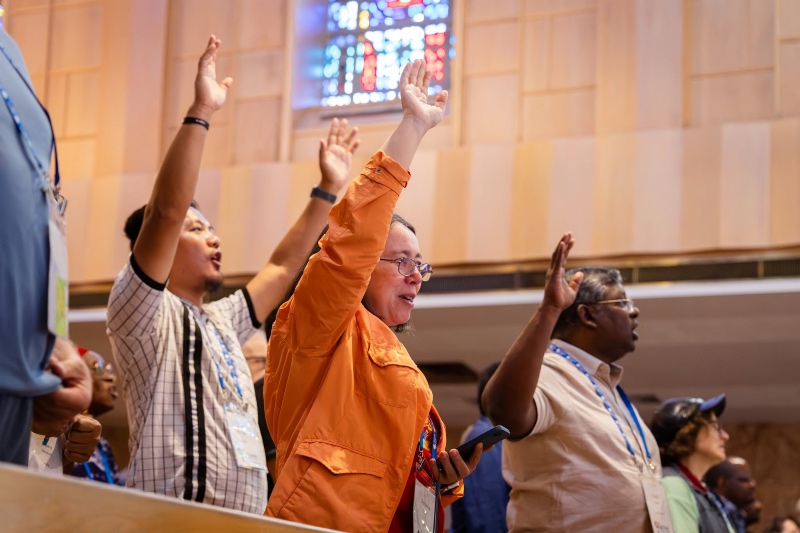
Last Pentecost, as I was preaching at a joint service of the churches in our local association, I joked saying if you don't like people from across the sea, then I assume you won't like heaven, as heaven is made up of people from every race, every tongue and every nation! That truth sits right at the heart of the day of Pentecost itself. When you look closely at that story, the miracle wasn't that everyone suddenly started speaking the same language. The miracle was that people heard ‘the wonders of God’ in their own native tongues. God didn't try to erase cultural differences but spoke right through them because our differences are the very way people encounter His presence.
As a ‘cultural architect’, I have come to believe that one of the Church’s most important tasks is creating spaces where people from different backgrounds can belong and flourish together without surrendering the unique gifts God has given them. Genuine intercultural ministry is never about assimilation as the goal is not to persuade others to become like us or to fit into our existing patterns, rather it should be about building communities where our shared identity in Christ is strong enough to embrace our differences and rich enough to enable us to learn from one another.
This distinction is so important because many of our churches have managed to become multicultural without ever becoming intercultural. A multicultural church can simply be a place where people from different backgrounds happen to worship together on a Sunday morning.
An intercultural church, however goes much further; it fosters relationships where people actually share life together. They learn from one another, serve alongside each other, and allow their understanding of discipleship to be deeply enriched through genuine friendship.
The difference might sound subtle on paper, but in practice it is huge. It is entirely possible for a variety of ethnicities to attend the same church while remaining largely disconnected. We can worship in the same room but live in completely separate worlds, celebrating diversity publicly while keeping a comfortable distance privately. We can sit next to each other every single Sunday without ever stepping over the threshold of one another's homes or hearing each other's stories.
Real intercultural life always moves beyond simple proximity and into deep relationship, and that is exactly where the work becomes both beautiful and challenging. Ten years of building cultural intelligence in church life and ministry have taught me that the single most important thing we can do is simply listen. As ministers, we are trained to preach and to pastor people from the front, yet some of the most transformative moments I have ever seen didn't happen in a service. They happened when people just sat down together and truly listened to one another.
Every congregation is a living archive of human lives, and these stories deserve to be heard. We have people in our pews who have uprooted everything to settle in Britain, carrying histories of sacrifice and the sheer resilience it takes to start again. Some know the deep sting of being excluded, while others have found a profound sense of acceptance and fresh hope.
At the same time, we have church members who can trace their family roots in the local neighbourhood back for generations, sitting right next to someone who arrived just last week from a country thousands of miles away. Every single one of these journeys matters and each one tells us something beautiful about the faithfulness of God.
Listening creates the sacred space where understanding can grow and allows us to move beyond assumptions and stereotypes and when we do we begin to see that every culture brings unique gifts to the body of Christ. Also, it helps us recognise one another not as representatives of a particular demographic, but as fellow disciples made in the image of God. Good listening builds trust and trust is the absolute foundation of any meaningful community.
Many migrant communities bring with them a deep commitment to prayer and a vibrant worship style alongside a remarkable perseverance through adversity. At the same time, long-established British congregations often contribute great strengths in deep theological reflection and sustained local community engagement. Each culture possesses gifts that can beautifully enrich the others. In a diverse congregation, this conviction becomes incredibly significant because it completely upends the assumption that wisdom resides primarily within one dominant group or culture.
Our Baptist heritage provides a particularly helpful framework for this kind of shared learning, because at the very heart of Baptist identity lies the conviction that the local church is a covenant community gathered around Jesus Christ, meaning that we are not simply individuals who happen to attend religious services, but a people who truly belong to one another. This understanding creates a robust foundation for intercultural life by reminding us that discipleship is always relational, just as our historic commitment to congregational discernment firmly establishes that every voice matters and every single member has something vital to contribute to the body.
Alongside this, hospitality remains absolutely vital, and I am not referring simply to a short greeting at the church door or refreshments after a service, though both of those matters immensely. Rather I am speaking of hospitality as a way of life. Many of the most significant breakthroughs in our churches don’t happen during formal church meetings but in ordinary conversations and growing friendships where people genuinely open their lives to one another so that barriers begin to fall and trust grows. In a wider culture increasingly shaped by isolation and fragmentation, this kind of hospitality becomes a profoundly powerful witness.
Mind you, I know from my own experience that living this out is rarely straightforward, as clashing communication styles and different expectations are bound to cause friction from time to time, and I have even had to deal with unconscious bias on occasion, but it has never been optional either, because a genuinely united Church always requires intentional effort at bridging our divides and learning to walk together in a completely new way. When misunderstandings and conflicts crop up, none of us should be shocked, because the first believers in the New Testament went through many of the same struggles as they wrestled with what it meant to truly belong and include one another.
When a church stays deeply rooted in Christ and led by the Holy Spirit, however, these challenges need not become permanent barriers. Instead, they can become unexpected opportunities for growth and richer fellowship. Intercultural ministry at its best goes far beyond managing our differences. It is about showing a watching world the reconciling power of the gospel, which binds people from every background together as one family in Christ. In a world as deeply divided as ours today here in Britain, that kind of witness is both desperately needed and wonderfully compelling.
As I reflect on the future of Baptist churches in Britain, I remain deeply hopeful because God is actively gathering people from many nations and backgrounds into our congregations. The real question before us is not whether diversity exists, but whether we will have the courage to embrace it as a gift from God.
-
Will we create churches where people genuinely belong?
-
Will we learn from one another?
-
Will we allow the Holy Spirit to use our differences to deepen our discipleship and strengthen our witness?
I believe these questions will become increasingly important in the years ahead because in a divided and polarised world, churches that model reconciliation across cultural boundaries offer something beautifully countercultural. They demonstrate that Christ is able to unite people whom society naturally keeps apart, revealing a kingdom that is vastly larger than any one nation, ethnicity or culture and more importantly, they offer a tangible glimpse of God's future because the book of Revelation ends not with uniformity, but with a beautiful diversity gathered in worship as people from every nation, tribe and language stand together before God. Their distinct identities have not been erased or homogenised, yet they are completely united in praise.
That vision remains the ultimate destination towards which the global Church is moving. Every Baptist congregation that intentionally cultivates intercultural life offers a foretaste of that coming reality, bearing witness to the reconciling power of the gospel and reflecting something of the beauty and generosity of God's kingdom.
That, for me, is a vision worth pursuing with all my heart.
Henry C Ohakah is a cultural architect, author, conference speaker, and leadership and change consultant. With a background in accounting and finance, he left his career to pursue ministry full-time.
Henry describes himself as a “reverse” missionary to the United Kingdom. He came to the UK as Methodist presbyter in Sheffield in 2016, and currently serves as the minister of Mountsorrel Baptist Church, Leicestershire
Images | Baptist World Alliance 2026 Annual Gathering | BWAToronto2026 album on Facebook
19/10/2026