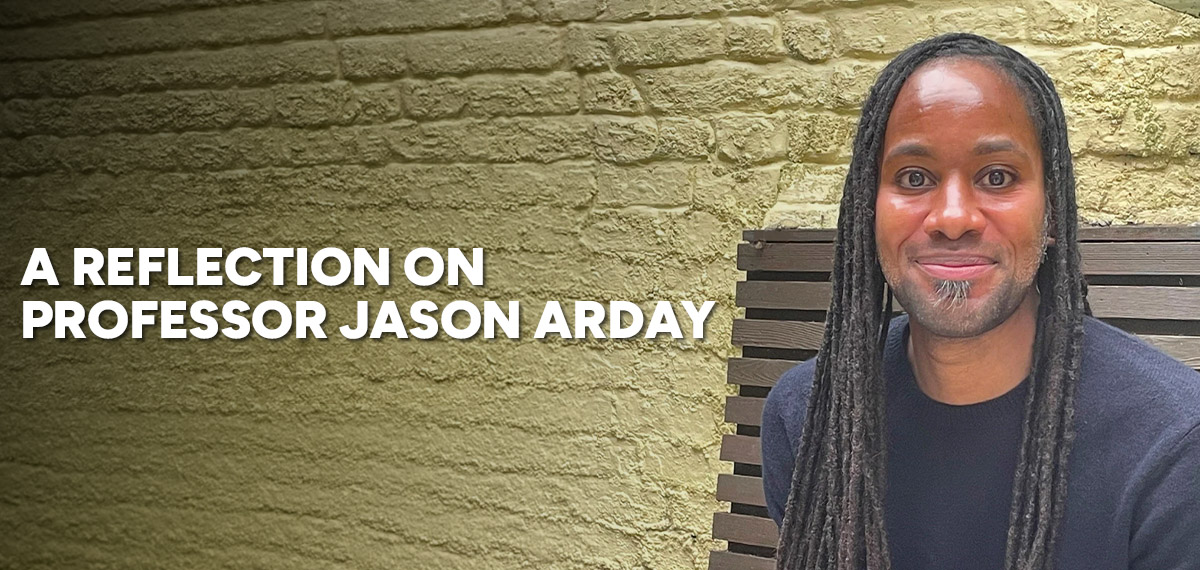
A reflection on Professor Jason Arday
Professor Arday’s death is not simply the passing of one man, it is a warning flare illuminating a deeper moral collapse: a society that has normalised racism, and a press that understood that normalisation well enough to weaponise it. By Wale Hudson-Roberts
You could be forgiven for thinking that slavery, and the terror that followed it, brought an end to the kind of lynching carried out by the KKK against Black bodies such as Emmett Till. Accused of “flirting” with a white woman, Till was abducted, mutilated and later found in the Tallahatchie River. The age of public spectacle looks different now, but its moral architecture has not disappeared.
The extremities of physical torture may no longer be visible in the same way, yet individuals such as Misan Harriman, Eniola Aluko, Diane Abbott and now Jason Arday remind us that modern public lynchings are executed through the press, accelerated through social media, and enabled by a watching society.
Professor Jason Arday is the most recent example of a Black public figure being subjected to a modern form of public lynching, carried out through broadsheets and amplified across social media. This was not ordinary’ scrutiny,’ nor was it simply a debate about academic standards. It became a coordinated spectacle of suspicion, ridicule and dehumanisation, in which repeated headlines helped to construct Arday not as a person, but as a symbol to be disciplined, controlled and destroyed.
That is why the language matters. For days, hostile phrases circulated across broadsheets and social media: “Cambridge’s diversity poster boy”; “Cambridge bosses face staff revolt over diversity poster boy row”; “Jason Arday is merely a symptom of academia’s moral disease”; “the Cambridge fantasist is proof that stupid intellectuals are poisoning Britain”; “Arday reflects a much deeper rot within universities”; “The Arday scandal exposes the creeping decay of Britain’s great universities”; “A PhD is no longer a sign of brilliance — take it from Arday.”
Taken together, these were not isolated criticisms but a pattern of public shaming. Two hundred and forty-nine articles over 22 days did not happen in a vacuum. They were the work of a mob in print and online, emboldened by culture wars, the far right, and an increasingly racialised national mood. An out an out public lynching.
On 14 August, Arday was found dead. To name this as a public lynching, however, is not to reach for metaphor lightly, but to recognise a pattern of public punishment, humiliation and death that has long been used to shame and control Black and Brown people. Jason’s death must not be treated simply as a media scandal or an individual tragedy. It is a mirror held up to the wider forces that made such public violence against Black and Brown people possible: a press willing to pursue, a public willing to consume, institutions slow to intervene, and a society too quick to justify racialised harm.
Given this ruthlessly orchestrated strategy by parts of the press, and its amplification by the far right, the question surely must be wider than media conduct. What does Jason’s death tell us about the society that enabled it, the church that has struggled to name it, and the Jesus who is always found among the wounded, shamed and publicly crucified?
While I fully understand why much of the blame has been attributed to the media, we get it wrong if we fail to recognise that society at large may have played a significant part in Jason’s death, both wittingly and unwittingly. The press is not acting in isolation; they are mirroring society’s positioning. They are because we are. This truth broadens their responsibility and widens their circle of accountability.
For now, Andy Burnham and his team may be preventing the far-right parties from gaining greater traction in the polls. Yet, a history of perceived 'tolerance’ towards the global majority has been replaced by examples of increasing intolerance. Anti-immigrant protests, matched with increasingly troubling immigration policies, point to a definite lurch towards the right. Nigel Farage’s success in the Clacton by-election is one of many signs of a cultural landscape that has changed .
Considering this context the question must be, in a society where public and media lynching is tolerated, excused, explained away and consumed, the church is left with an unavoidable question: where is its voice?
I may be wrong, but at the time of writing this article, I have found only one denomination, the United Reformed Church, that has publicly named this evil and condemned it for what it is. The church cannot stand at the edge of this moment and say nothing. Professor Arday’s death is not simply the passing of one man, it is a warning flare illuminating a deeper moral collapse: a society that has normalised racism, and a press that understood that normalisation well enough to weaponise it. The press seized the moment because society had already prepared the ground.
So, if the church cannot find its voice here, if it cannot speak when a Black neurodiverse man is publicly shamed, hunted, broken and finally dies, the question is no longer simply what society has become, it is what kind of church we have become.
God does not advocate from a distance, but comes near in the person of Jesus Christ, therefore, national and local churches do not have the luxury of silence. As the Revd Dr Martin Luther King Jr, (who was also accused of plagiarising parts of his PhD and who also suffered a public lynching), once said: “Our lives begin to end the day we become silent about things that matter.”
So whether this means writing to a local MP, decolonising our national and local structures and theologies, making reparations for harm done, journeying closely with Black and Brown people who feel unsafe just walking down the street, the call to the church is clear: repent, act and repair.
Silence is not an option. Neutrality is not an option. If Jesus is found among the wounded, the shamed and the publicly crucified, then the church must be found there too — not tomorrow, not after another public inquiry, not when the headlines fade from the Jason affair, but now. In short, the role of the church is to speak prophetically against what is fast becoming the sin of our age: systemic racism.
Wale Hudson-Roberts is the Justice Enabler of the Baptist Union of Great Britain, and pastor of John Bunyan Baptist Church in Oxford.
This reflection originally appeared in Keep the Faith magazine, and is republished with permission
Image | Faculty of Education, Cambridge University
12/10/2026