The Hardest Problem: God, Evil and Suffering by Rupert Shortt
'Not only helpful to Christians but worth passing on to thoughtful unbelievers who find the problem of evil and suffering an obstacle to belief'
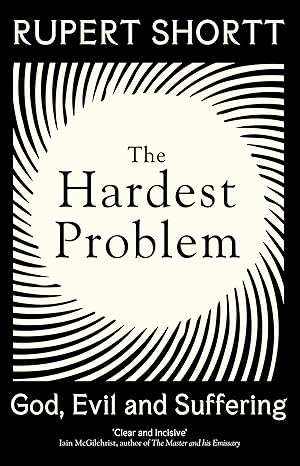 The Hardest Problem: God, Evil and Suffering
By Rupert Shortt
Hodder and Stoughton
ISBN 978-1-399-80272-7
Reviewed by Ernest Lucas
This book tackles a longstanding, difficult problem facing religious believers: if God is both all-powerful and all-loving why does God allow evil in the world? Shortt thinks this challenge can only be faced head-on after some ground-clearing because both atheists and theists often enter the debate with unexamined presuppositions and assumptions.
Chapter one discusses whether the world has a creator, and therefore presumably a goal. Those with a materialistic framework often agree that life is ‘nasty, brutish and short’ and history lacks any rhyme or reason.
A Christian framework (shared to a degree by other faiths) sees the purpose of our life on earth as moral growth. Meeting material needs is important but, at its deepest, happiness is found in self-sacrificial love. Hardships will come but endurance is a spur to salvation in a longer perspective, in this world and beyond.
Which framework is more viable? Shortt presents the debate with clarity and fairness. The second chapter surveys the debate about theism and naturalism. If theism is worth serious consideration, then so are faith-based responses to the problem of evil. There is a clear and helpful survey of the debate: the cosmological arguments; the argument from moral truths; are humans spiritual beings made in God’s image or just the quintessence of dust?
Chapter three reaches the book’s central theme. Shortt argues that the deity most sceptics reject is an abstract ‘God of the philosophers’ not the God of Abraham, Isaac, Jacob and Jesus Christ. He discusses God’s nature and how God acts in the world.
There is insightful discussion of prayer and of miracles. A brief discussion of ‘natural evil’ precedes a longer one of moral evil, its origin and nature. He concludes ‘that the explanation of evil in a universe created by a good and all-powerful creator must be sought eschatologically’ in the final consummation of that creation (p. 74).
A discussion of ultimate salvation and Hell follows. Different views are presented and Shortt says he is ‘a hopeful universalist’. He stresses that no theology is capable of taking away the pain of suffering. What people want or need is God and so Christians, by their love and service, need to allow God to be there for people in their suffering.
The final chapter addresses objections to the claim that Jesus’ death made atonement for human sin. It only makes sense if Jesus was God incarnate, and he deals with objections to that. He summarises the historical evidence for the resurrection since the resurrection assures us of the efficacy of Jesus’ death for us. Different New Testament images for the atonement are discussed. The book ends with a suggestion of how the biblical story helps us to believe in, and sometimes discern, God’s providence in the messiness of history.
This book will not only be helpful to Christians but is one that is worth passing on to thoughtful unbelievers who find the problem of evil and suffering an obstacle to belief.
The Revd Dr Ernest Lucas is Vice-Principal Emeritus, Bristol Baptist College and an Associate Research Fellow, Spurgeon’s College, London.
Baptist Times, 15/03/2024