Baptist Union Council: October 2026
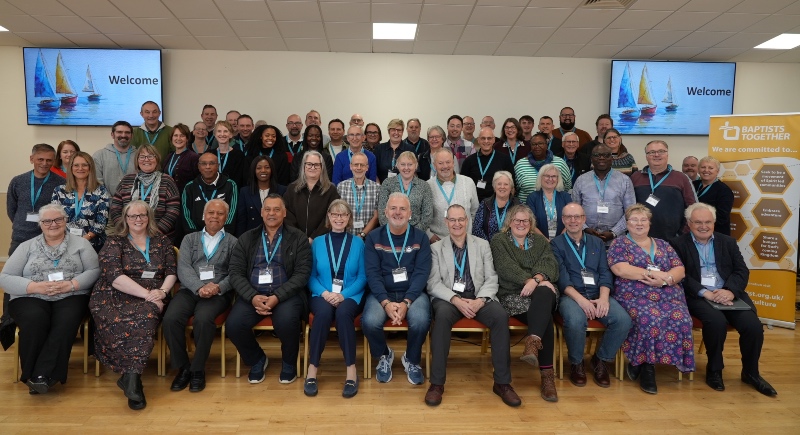
Revisions to our Ministerial Recognition Rules and ministerial disciplinary processes, and the initial presentation of a renewed framework to clarify and simplify Baptists Together's existing vision, values, mission and objectives, were among the key items at the October Baptist Union Council.
Council also received updates on the Mission Resolution, the Financial Model Review and changes to church memberships, and voted on Key Roles nominations.
Worship was led by Pete Leveson, a regional minister with the East Midlands Baptist Association, and communion shared on the Thursday afternoon.
Council was held at the Hayes Conference Centre in Swanwick, Derbyshire on 21-22 October.
Scroll down for the following reports:
-
Changes to the ministerial disciplinary processes and the Ministerial Recognition Rules
-
Vision, Values, Mission and Objectives
-
Mission Resolution
-
Financial Model Review
-
Finance and pensions update
-
New member churches, closures, name changes
-
Key Roles Nominations Team
Changes to Ministerial Recognition Rules and disciplinary processes
Council approved a revision of the Ministerial Recognition Rules and our disciplinary processes, updating the framework governing ministerial conduct, safeguarding, practice reviews, and pastoral support.
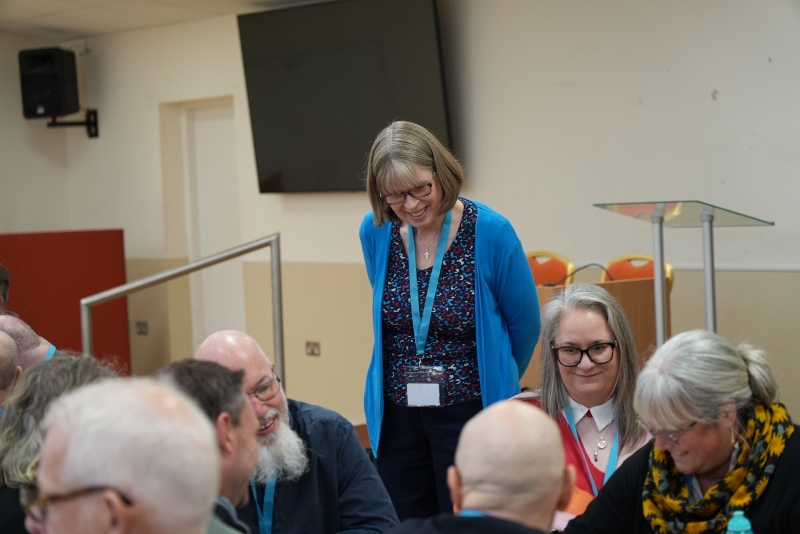
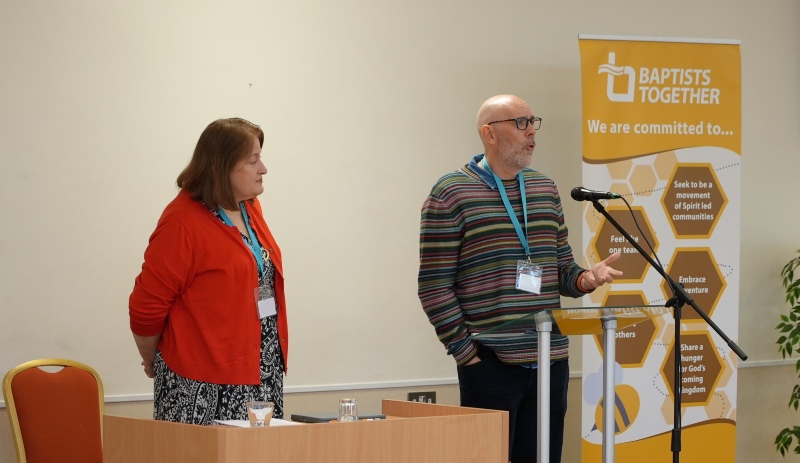 The session was presented by Lee Johnson, Ministries Team Leader, and Rachel Stone, HR and Safeguarding Team Leader (pictured). They highlighted that while greater openness and accessibility in raising concerns are welcome, procedures needed to be strengthened to ensure ‘clarity, fairness, consistency, and proportionality’ for all parties involved.
The first part of the session helped Council members understand the purpose and framing of the updated rules. In 2021 the Union handled 9 formal complaints about accredited ministers, but that number rose to 35 in 2025. In 2021 nearly all complaints were investigated. By 2025 around half were investigated, and of those 40 per cent resulted in serious fault removal or resignation.
The changes were both highlighted in the agenda paper and then explained during the presentation. A core element of the revised framework is a clearer classification of conduct thresholds, ranging from "No Fault" to "Gross Misconduct."
The previous category of "Minor Fault" has been removed to avoid language that might downplay legitimate concerns. Instead, conduct falling below expected ministerial standards will be categorised as "Fault" and addressed through a structured, formal Ministerial Practice Review (MPR).
The MPR operates as an improvement process outlining required changes, developmental support, and accountability arrangements, with failure to engage triggering escalation to a "Serious Fault" investigation.
Because 60 per cent of investigated complaints fall below the serious fault threshold, the MPR provides a ‘structured, reflective conversation to foster learning and improvement,’ said Lee. It ‘establishes an accountability framework focused on structured growth rather than mere sanctions.’
To prevent open-ended proceedings, the updated Rules introduce mandatory investigation review points after initial assessments and key interviews, requiring explicit, recorded decisions on whether an investigation should proceed or conclude. Under previous rules, once an investigation started, there was no mechanism to stop it.
The framework also formally embeds a standalone Pastoral Support Framework - separating pastoral care from procedural communications - to support complainants, victims and survivors, ministers, witnesses, and affected churches.
In addition, the rules strengthen safeguarding alignment, mandate required training set by the Ministerial Recognition Committee (MRC) across register categories, and establish an appointed deputy to act in the absence of the Ministries Team Leader.
To help give a more informed understanding of how the new rules work, Lee and Rachel led Council to consider two case studies. These were conducted in small groups, while there was an opportunity for questions in plenary.
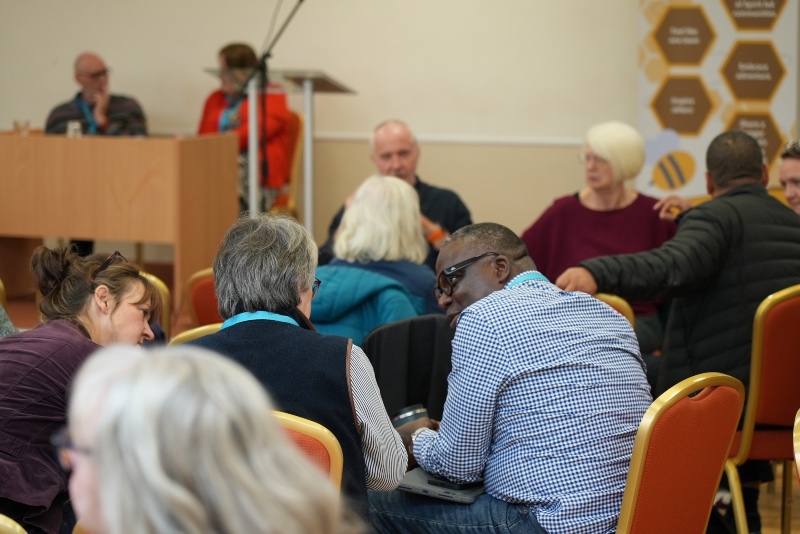
The rules must remain 'fit for purpose within an increasingly litigious culture,’ said Lee. “In a covenantal community, accountability and care belong together. We neither minimise harm nor abandon people to opaque or inconsistent processes. The updated rules seek to bring this to practical expression through clearer expectations, a better understanding of safeguarding practices and processes, a fair process for all, and appropriate pastoral support.”
The proposed changes were well received and were approved unanimously.
 Vision, Values, Mission and Objectives
Two sessions were devoted to exploring a proposal to clarify and simplify our existing vision, values, mission and objectives.
The first session served as an introduction to the proposed Vision, Values, Mission and Objectives (VVMO), while the second switched to deeper engagement and group work.
The VVMO initiative has arisen out of the Financial Model Review (FMR), explained Support Services Team Leader Chris Jones.
The FMR has highlighted the need to communicate in a clear, simple, compelling, and consistent way why our movement exists, the value of belonging, and the resources needed to fulfill its wider collective calling.
The Core Leadership Team (CLT) appointed a subgroup to carry out this work, consisting of Clare Hooper (Southern Counties Baptist Association - SCBA), Mark Clay (East Midlands Baptist Association), Joth Hunt (South Eastern Baptist Association), Hayley Young (then SCBA), Rachel Stone (Specialist Teams), and Lynn Green (General Secretary). Their task was to clarify and simplify the existing vision, values, mission, and objectives rather than create entirely new ones.
Clare spoke to explain the subgroup’s findings. Given there are many approaches to defining VVMO, these are the definitions being used.
-
Vision – What we want to see/be in the long-term
-
Values – The non-negotiable values that define us and guide everything we do
-
Mission – What we do – concrete and straightforward
-
Objectives - What are the key things we must do now
Clare explained how since the Futures process in 2012, the established vision statement has been Growing Healthy Churches in Relationship for God's Mission. While this statement has served us well, it describes a process—something the Union does to or for local churches.
The proposed replacement is simpler and emphasises shared action: "Following, seeking, sharing Jesus."
She broke down each component part:
-
Following: Reflects our primary identity as disciples first.
-
Seeking: Captures a core Baptist discipline—seeking the mind of Christ together in church meetings, Associations, and Council.
-
Sharing: Reinforces that the gospel is meant to be shared; witness and mission are central to our identity rather than an added extra.
-
Jesus: Keeps Christ at the centre rather than structures or the Union itself.
Rather than drafting a new list of core non-negotiables, the proposal explicitly adopts the Declaration of Principle as our core values, she continued. These represent the foundation we covenant around together:
-
The Lordship of Jesus Christ as the sole and absolute authority in faith and practice, as revealed in Scripture.
-
The liberty of each local church under the guidance of the Holy Spirit to interpret and administer His laws.
-
Believers' baptism.
-
The duty of every disciple to bear witness and participate in God's mission in the world.
The next part of the proposal identifies five clear, concrete operational areas that reflect our charitable objectives:
-
Resourcing Mission: Pioneering, planting, and equipping local churches for mission in their specific contexts.
-
Developing Leaders: Investing in godly leadership in all its various forms.
-
Supporting and Advising: Providing guidance, expertise and support to our churches.
-
Amplifying Our Voices: Enabling Baptist representation and engagement in the public square, both nationally and internationally.
-
Strengthening Relationships: Honouring the covenant interdependence between churches, associations, colleges, specialist teams, the wider Baptist family, and ecumenical partners.
“These five points articulate what the movement already carries out, framed in a clear, simple, and consistent manner,” Clare said.
The new overall framework connects these elements on a single page:
-
At the top (Vision): Baptists Together - Following, Seeking, Sharing Jesus.
-
Underneath (Mission): Five practical areas describing what we do together.
-
Holding it up (Core Values): The Declaration of Principle.
The objectives section represents the least developed part of the proposal, which is intentional. Historically, a recurring weakness has been agreeing on good priorities without setting concrete outcomes or establishing mutual accountability.
One shared objective that has consensus is the goal of having 360 more ministers by the end of 2028. Other shared objectives need to be similarly discerned together.
The goal is to formulate each objectives and invite all parts of Baptists Together, including local churches, to see how they can directly contribute, turning the framework into ‘an actionable call to respond to a changing world.’
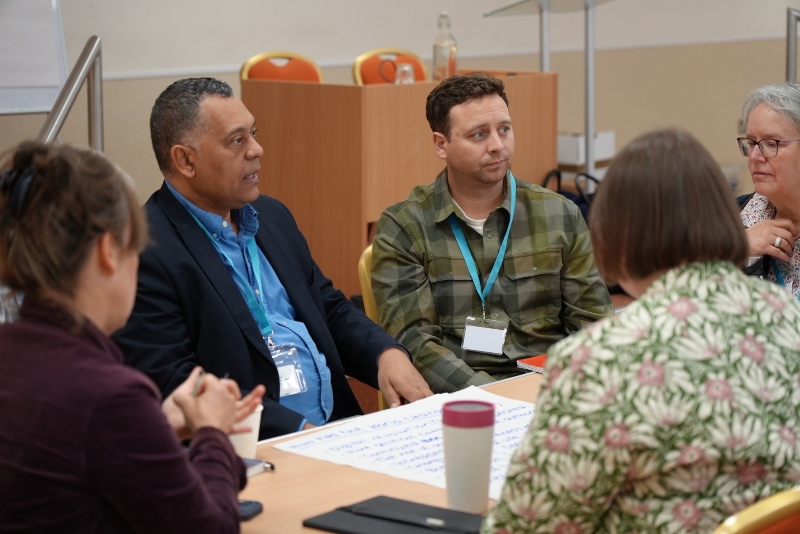
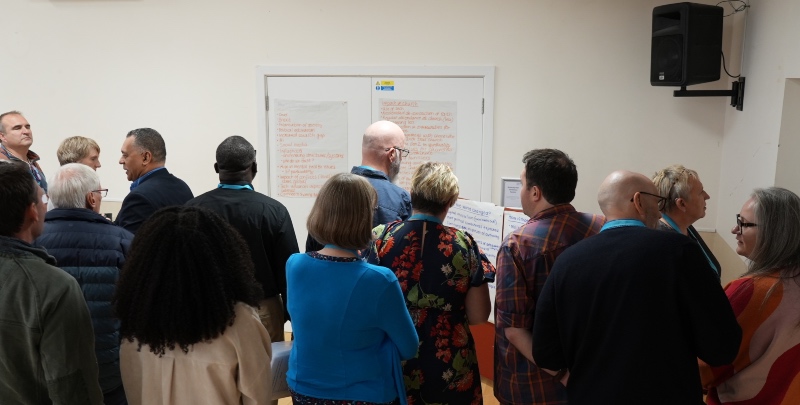
Council members were invited to discuss and share feedback on the VVMO. Breaking into discussion groups on tables, they were given a series of questions:
-
How has the world changed since 2012 and how is that impacting your church?
-
How would the proposed VVMO help your local church community connect and belong within our movement?
-
For your church/ministry, how would this fit alongside your vision and hopes for the future?
-
Have we missed anything?
-
Do the 5 areas communicate what we do and the value of being part of Baptists Together?
-
How could you amplify our VVMO and help it gain momentum?
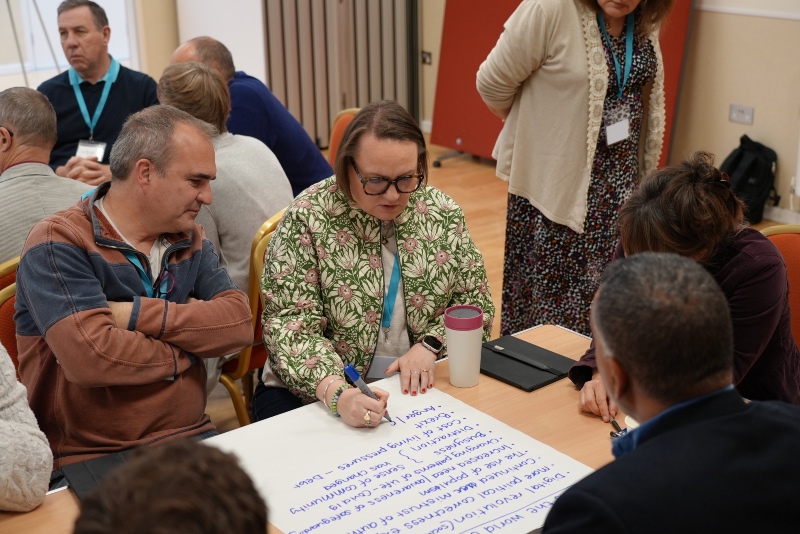
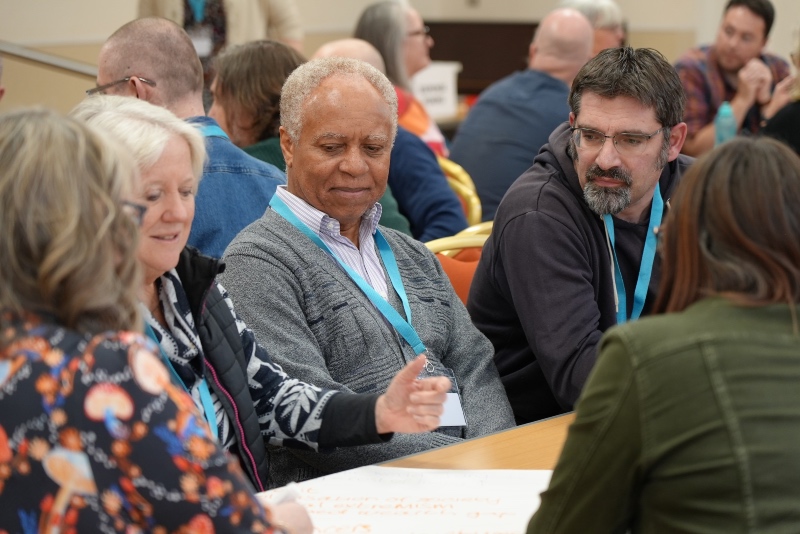
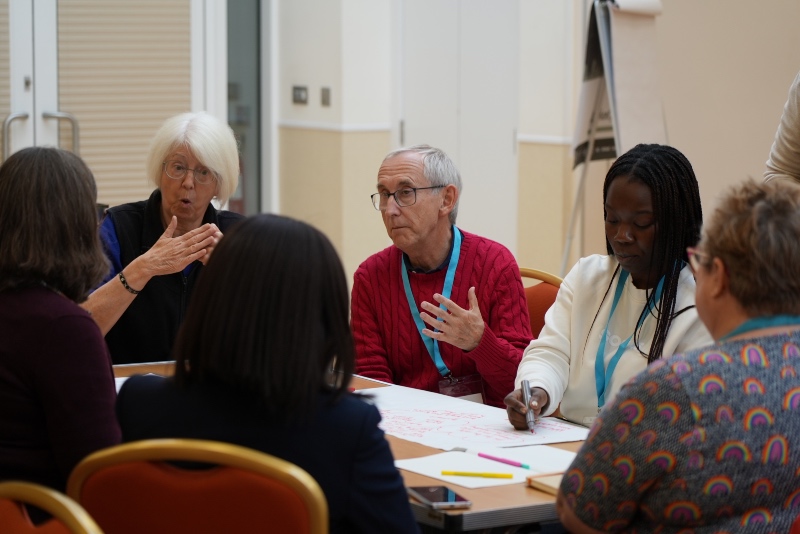
Feedback was shared in a variety of ways – written on sheets, which were then placed around the room for all to reflect on, by hearing from each table, and in plenary.
A number of themes emerged. There were questions about the VVMO's likely impact, particularly at a local church level. Some felt it could be clearer on Baptist identity, vision and the benefits of belonging, while acknowledging that it broadly describes the work of Baptists Together. It was suggested the VVMO needs to make the kingdom of God, discipleship, covenant and interdependence more explicit. Susan Myatt, minister for the Deaf Community at Open Hands Signing Church, Rising Brook, Stafford, raised a concern regarding the word 'voice' in the framework (Amplifying our voices). It can feel exclusionary, particularly within the Deaf community, she said, and suggested we consider alternative phrasing to ensure it is genuinely inclusive of everyone.
Alongside offering its discernment, Council is ultimately responsible for setting the broad strategic direction of the Baptist Union of Great Britain. The aim therefore is that it will vote on whether to adopt the VVMO in March.
With this in mind Council members were asked to vote on two proposals. The first was to affirm the VVMO review presented and ask General Secretary Lynn Green to reflect with the Core Leadership Team on Council’s feedback and refine the VVMO so that it can be presented to Council for approval in March 2027.
The second was to ask Council members and Association Trustees to offer further constructive feedback, together with an indication of how the VVMO could be embraced in their sphere, to our General Secretary by Friday 11 December 2026.
Both proposals were approved.
Mission Resolution update ahead of 2027 Assembly
The proposed ‘Shared Understanding of Mission’ set to be voted on at the 2027 Baptist Assembly has been shortened and clarified to reflect feedback gathered during the two-year discernment process, Council heard.
Carl Smethurst, a member of the Mission Forum steering group which has developed the shared understanding, presented the update.
First introduced at the 2025 Assembly, the initiative aims to articulate an integral approach to mission that holds together proclamation and demonstration—words and action.
“The intention remains to offer a shared foundation for our understanding of mission,” the agenda report noted. “The intention is NOT an exhaustive definition, centrally imposed strategy or expectation that every church will express every aspect of mission in the same way.
“Rather, it seeks to reflect and embrace the integral understanding of mission seen in so many of our churches – holding together proclamation and demonstration, words and actions, within our participation in the mission of God.”
Following initial Council guidance not to rush, the Mission Forum engaged in an extensive listening exercise across churches, pioneers, chaplains, and successive assemblies, including feedback gathered via story-collecting postcards at the 2026 Assembly.
“While the stories heavily reinforced that integral mission is actively happening on the ground, the feedback on the text itself highlighted several challenges,” Carl said.
“Churches felt the original statement was too wordy, needed to be sharper and more concise, required a stronger emphasis on the Holy Spirit and evangelism, and needed to be more explicitly rooted in biblical foundations and the Declaration of Principle.”
Responding to the challenge of providing "less words but more in them," the Mission Forum produced a revised, concise statement accompanied by an in-depth theological and practical resource document.
The core statement reads:
“Abiding in God and participating in His mission, we as Baptists bear witness to Jesus Christ, empowered by the Holy Spirit through words and actions...”
To make the statement 'memorable and actionable for local churches', it then incorporates four key commitments—known as the four Ps:
-
Proclaiming Christ, inviting people to repentance and faith, to be baptised, and to follow Him as lifelong disciples.
-
Present amongst people and nurturing Christian communities.
-
Practising compassion towards our neighbours.
-
Pursuing justice, peace, and the flourishing of creation.
“The revised wording responds directly to that listening, with particular priority given to making the Shared Understanding shorter, clearer and more memorable (widely considered the highest priority),” stated the agenda paper.
Carl spoke positively of the discernment process itself, which had resulted in the reshaping.
Council were invited to support sending the revised text out to churches in the new year for final prayerful engagement ahead of a formal resolution and vote at the May 2027 Baptist Assembly in Harrogate. Churches will be invited to send a representative to Assembly to vote on the resolution.
Carl also invited Council members to consider how the statement can move beyond ‘a static poster on a noticeboard’ to actively shape resources, priorities, and communications across Baptists Together. “It’s really important this makes a difference on the ground,” he said.
He also highlighted an international dimension – the Baptist World Alliance’s Acts 2 Movement initiative, which is ‘the mobilisation of our Baptist family in prayerful pursuit of a global Pentecost that overflows in church renewal and holistic Gospel witness around the world.’ It is designed with five key paths - a Bible Path, Witness Path, Care Path, Neighbour Path, and Religious Freedom Path - as we near 2033 and the 2000-year anniversary of the Church’s birth.
Linking with the Acts 2 Movement initiative could be an appropriate way of ‘concretising the resolution’ for individuals and local churches, noted Lynn Green.
A video introducing the Acts 2 Movement initiative was shared with Council.
Financial Model Review
There was an update on the Financial Model Review. While it concluded on one level at the March 2026 Council, the Financial Sustainability Working Group (FSWG) remains in place because the agreed formula runs only until 2028.
The areas of focus for the group are:
-
Guidance on Byelaw 7, which allows Associations more freedom to explore more income generation.
-
Increasing income – starting with, but not limited to, Home Mission giving.
-
What 2029 and beyond could and should look like, and the process for getting there.
-
Costs Associations and BUGB can sensibly share to reduce all of our cost bases.
Treasurer Mohan Pandian explained how income generation has to be at the heart of the FMR, and this will be the focus for the immediate future.
London Baptists Team Leader Phil Barnard, another member of the FSWG, spoke of the need for a compelling, cohesive and inspiring message. The increase in giving to Home Mission in 2025 was partly inspired by the +1% initiative, he said.
He also highlighted how Associations already collaborate to save money and share costs in places, approaches which may be built on in the future.
Finance and pensions update
Chris Jones, Support Services Team Leader, and Honorary Treasurer Mohan Pandian presented a finance update.
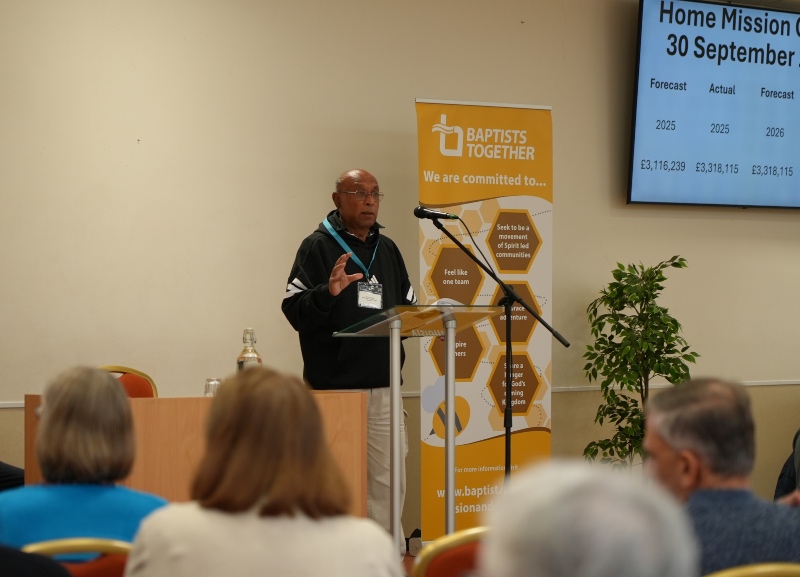 Mohan (pictured) highlighted how Home Mission giving had increased for the first time in eight years in 2025. Both he and Chris thanked Associations for their work in promoting Baptists Together Home Mission, and churches for their generous giving.
Progress to date in 2026 has been good, with Home Mission up one per cent on the corresponding figure a year ago. Mohan encouraged prayer for the last quarter of the year - this is the time when a sizeable proportion of the funds come in – acknowledging that it continues to be a challenging environment. Chris reminded Council that if every church across Baptists Together gave five per cent of their income, the impact would be 'game-changing'.
There was an update on the Family Solution Loan, the loan taken out to reduce the deficit in the Defined Benefit Pension Scheme. The way the loan was created was 'a work of genius', said Mohan. However, the mechanism to pay the loan back - the sale of surplus Retired Baptist Ministers Housing Organisation (RBMHO) properties - had not materialised, due to increased demand for those properties. Rising interest rates since 2021 have created a growing and unsustainable annual loss for BUGB. The FSL balance has, however, been reduced from the initial £20m to £16.85m by October, and there is a mechanism in place to further reduce it to around £14m by the end of 2028.
There was an update too on the review of the Defined Contribution Baptist Pension Scheme, which had been mentioned at the previous Council in March. The scheme is ‘doing well’ at the moment, said Mohan, but there are concerns over its running costs going forward. The Baptist Pension Trust Ltd runs the scheme, supported by specialists such as Broadstone. As a result of the concerns regarding costs, a working group has been set up to explore options.
There was an update about the splitting of the Baptist Union Corporation into two companies. Mohan explained this is being done at the request of the Charity Commission. The BUC is often a holding trustee for church buildings and is a lender: if the church applies for a Baptist Union Loan, there is concern over a potential conflict of interest.
The Baptist Finance Corporation is therefore being set up to separate the finance side of the BUC from its role as holding trustee. The aim is for these new structures to be in place at some point over the next 15 or 16 months. Mohan explained that the timeline is dependent on a number of variables. There will then be two separate boards of directors, achieved by splitting the current BUC board, which has 20 members, across the two companies.
"We are blessed – loans are increasing – churches want to widen and expand missional activity," Mohan said. "But the current structures we have mean we have to make this separation."
Chris noted it will have an impact on the Finance Team, as there is another entity to manage.
Council members voted to approve changes to BUC articles to reflect the more modern Charity Commission requirements.
New member churches, closures, name changes
Council noted and affirmed a series of membership changes across the Baptist Union of Great Britain.
Trinity Church, Monkspath - a Local Ecumenical Partnership (LEP) involving Baptists, the Church of England, and the Methodists - has joined BUGB, subject to written confirmation. The West Midlands church was previously in membership with the Heart of England Baptist Association (HEBA) only.
Council also noted the closure of nine local churches across eight regional associations:
-
Temple Ewell Baptist Church (SEBA)
-
Milton Malsor Baptist Church (CBA)
-
Hartley Wintney Baptist Church (SCBA)
-
Trinity Baptist Church, Chesham (CBA)
-
Farthingstone (CBA)
-
Penge Bible Church (LB)
-
Buttershaw Baptist Church (YBA)
-
Dunnington Baptist Church (HEBA)
-
Mount Zion Baptist Church, Bonymaen, Swansea (SWaBA)
“Often there is someone who first came to the church as a baby, and their hearts are breaking at its closure,” said Council moderator Rob May.
“We pause give thanks to God for the witness and ministry of these churches.”
Two churches have ceased membership with BUGB: Epping Green (EBA) and Church of the Holy Family, Blackbird Leys. The latter, an LEP, is continuing as a joint Church of England and United Reformed Church congregation.
In addition, two church name changes were recorded: Hampton Wick Baptist Church is now known as The Church on the Thames, while Cornerstone: King’s Lynn Baptist Church has reverted to King’s Lynn Baptist Church.
Finally, Council noted that Hockliffe Street Baptist Church has joined the Central Baptist Association (CBA), having previously remained in membership with BUGB only since CBA’s formation in 2002.
Key Roles Nominations Team
Council approved two nominations to the BUGB Trustee Board, while hearing a call for prospective nominees to address current and upcoming trustee vacancies.
Delivering the report of the Key Roles Nominations Team (KRNT), moderator Barbara Carpenter commended Professor Sir Malcolm Evans and the Revd Phil Barnard to serve as BUGB Trustees.
Sir Malcolm, Principal of Regent’s Park College, Oxford, brings extensive expertise in international law and human rights to the board. Phil, Team Leader of London Baptists since 2016 and member of the Core Leadership Team (CLT), brings substantial experience in regional oversight, church governance, and missional development. Both appointments were approved by Council.
Barbara noted that a previously anticipated trustee nomination had to be withdrawn due to personal circumstances, leaving one current vacancy. Furthermore, with current trustees the Revd Philip Lutterodt and Mark Spriggs concluding their third terms in August 2027, two additional vacancies will open next year.
She urged Council to prayerfully encourage prospective candidates to apply. There is a particular focus on candidates possessing management, digital, and fundraising skills. “We want the right people,” Barbara said, “the people God wants us to be in our trustees.”
Barbara also brought the names of three people to join the Accompanying Group, which prayerfully supports CLT. These were Susanna Hinton (elder, New Life Baptist Church, Northallerton); Emmanuel Ntusi (minister, Coldharbour Lane Baptist Church, London); and Ruth Tiso (minister, Pear Tree Road Baptist Church, Derby). Council members approved all three recommendations. “It’s a real joy we have commended Susanna, Emmanuel and Ruth to you,” said Barbara. “We had such a joyful afternoon with them, and we have confidence they will bring much to CLT.”
Barbara also highlighted changes within the KRNT itself, welcoming the Revd John Goddard (minister, Saffron Walden Baptist Church) to the team, while noting that the Revd Graham Ensor will step down in January 2027 as he concludes his role as Regional Minister Team Leader of the Yorkshire Baptist Association.
11/11/2026